
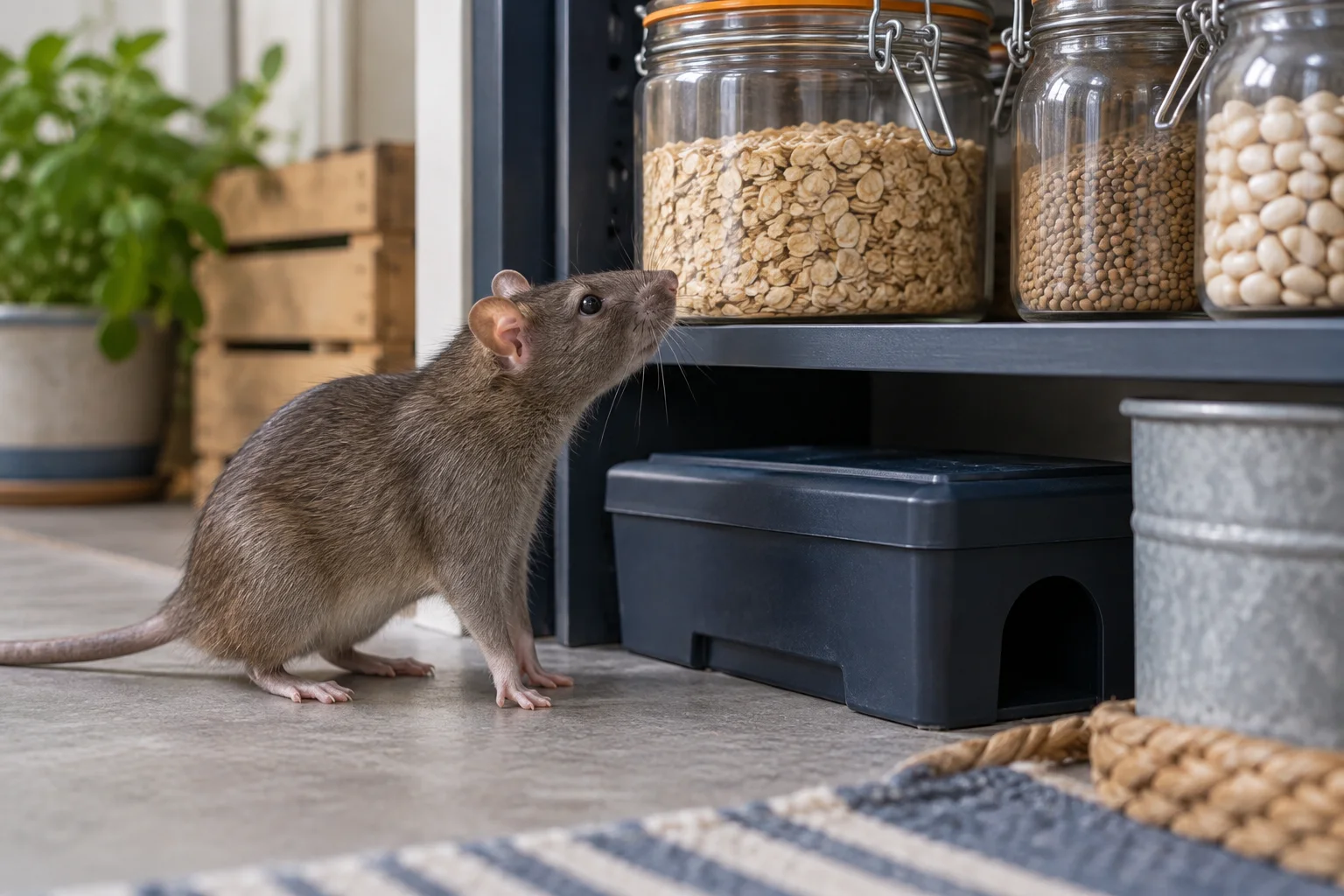
AI-generated illustration
Caution is not immunity
Rats are capable learners. UC IPM notes that they explore and memorize pathways, obstacles, food, water, and shelter, and that they can avoid unfamiliar objects and food for days or longer. This cautious response is often called neophobia. It does not mean a rat can identify every toxic substance by reasoning about a label, nor does it prove that a rat population is immune to a product. It means bait acceptance depends on context, food competition, placement, and what the animals have experienced.
A missing bait block is not proof that a rat died, and untouched bait is not proof that poison is ineffective. Another animal may have interacted with a station, a rat may have found easier food nearby, or the placement may not intersect a travel route. A responsible program treats station activity as one monitoring observation among several. Fresh droppings, gnawing, captures, camera records, and repair checks are needed to decide whether indoor activity is actually declining.
Why abundant food changes bait results
A rat that can eat open garbage, pet food, bird seed, spills, compost, feed, or restaurant waste has little reason to investigate a new food in an unfamiliar box. That is one reason sanitation is part of control. Secure food and waste, clean spills, remove feed overnight where feasible, and manage clutter that supplies nearby cover. These measures do not make poison stronger; they reduce competing resources and make it easier to see whether a targeted plan is working.
Do not respond by putting out more bait in more places. Loose or casually placed rodenticide creates exposure risks for children, pets, and wildlife and can conflict with the product label. EPA says rodent baits should be used according to their labels and household products should be placed in required tamper-resistant stations. A bait station is an enclosure with a specific purpose, not a license to make poison available wherever rat signs appear.
Poison has limits even when it is eaten
A poisoned rat does not necessarily die at the station or leave a building. It may die in a wall, ceiling, duct, crawlspace, or another inaccessible area, creating odor and removal work. No reliable plan should promise that an animal will go outside to seek water. This limitation is especially important in occupied homes and multi-unit buildings where an inaccessible carcass can affect neighbors and require access to finished spaces.
Bait also does not close an opening, repair a door sweep, remove a burrow, clean contamination, or protect stored food. If a route remains open, other rats can continue using it. Ask any provider to identify the suspected entries and food sources, explain why bait is proposed, map the station locations, state who will check them, and describe the follow-up criteria. Those answers reveal whether baiting is being used as a measured component or as a substitute for inspection.
Safer options can offer clearer evidence
For confirmed indoor rat activity, CDC recommends traditional snap traps and advises against glue traps and live traps. A commercial rat-sized snap trap placed in a protected, monitored location provides an observable result: it can be checked and any capture can be removed. It still requires proper placement, protection from children and pets, and regular checks. It is not appropriate to improvise dangerous mechanisms or scatter traps in every room.
Rats may initially avoid new traps as well as new bait. Placement along a verified route and reduction of competing food are more useful than switching repeatedly to stronger products. A provider can adjust the plan based on evidence, but no device can solve a building that remains easy to enter and full of food. The right response to apparent avoidance is a review of route, placement, food access, and species identification.
Use biology without turning it into a myth
Calling rats smart can help people understand why casual products fail, but it can also encourage myths about invincible city rats or poison-resistant super-animals. Resistance to a particular active ingredient is a technical issue that requires evidence and product-specific expertise; it cannot be diagnosed from one untouched station. Conversely, a rat's cautious behavior does not justify escalating exposure or ignoring label directions.
Work from conditions that can be verified. Record fresh signs, secure resources, repair durable entry routes, select a method that can be checked, and reassess if activity continues. Keep original product packaging and seek prompt veterinary or poison-control advice if an exposure is suspected. A careful plan respects the rat's ability to learn while also protecting the people and animals who share the property.
Make a bait decision auditable
Before approving a bait program, ask for the product name, active ingredient, current label, station locations, service schedule, and disposal process. Ask how pets and wildlife will be protected and what evidence will cause the plan to change. These questions address controllable risks and limits of the proposed treatment instead of asking whether rats are clever enough to defeat poison.
Keep a dated station map and treatment record until the issue is resolved. It can show whether a station was checked and whether a change followed a repair, rather than a single unexplained visit. Any bait should be removed or changed only under its label and documented plan, with unused product kept in its original packaging away from children and animals.